
Compare the Most Popular Seiko Mod Modifications Before You Start Building
Why the Numbers Behind This Hobby Are Surprising
Over 80 percent of first-time modders report spending more on parts than they originally budgeted for their host watch. That single statistic reframes the entire hobby. The complete guide to Seiko mod modifications is not really about the tools or the techniques, it is about understanding which modification path delivers the most visual and mechanical return before you order a single part.
Seiko became the default platform for custom watchmaking for a straightforward reason: the brand produces movements that are robust, widely serviced, and built around standardised case families. The SKX007, the SRPD series, and the NH35-powered cushion cases all share enough dimensional logic that an enormous third-party parts ecosystem grew around them. Choosing between modification approaches, however, is genuinely complex. Four main paths dominate the community, and each one rewards a different kind of builder.
Swapping the Dial and Hands: The Quickest Visual Transformation
Dial and hand swaps are where most builders begin, and for good reason. The impact-to-effort ratio is higher here than anywhere else in the process. A sunburst dial in deep teal paired with cathedral hands can turn a stock SRPD55 into something that looks nothing like its origin, without touching the movement or the case.
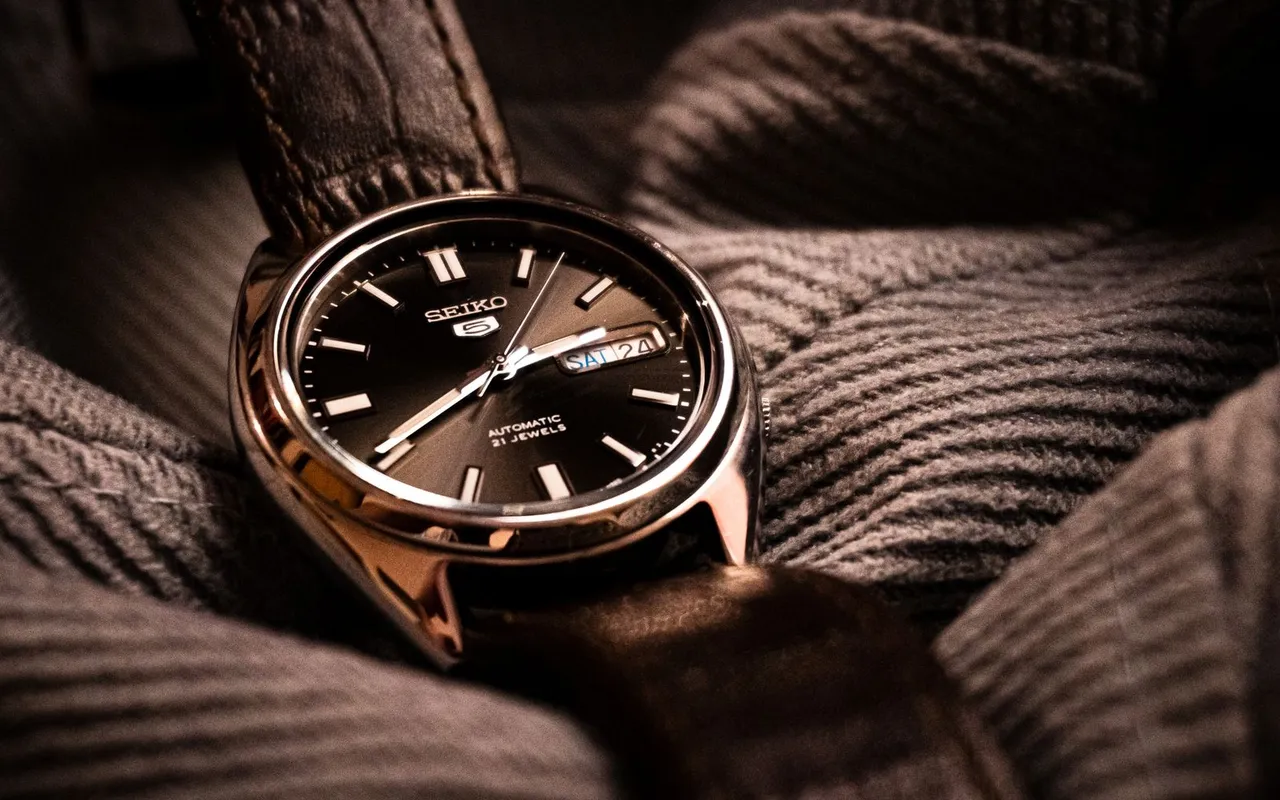
The main variable to evaluate is dial feet compatibility. Seiko dials use a two-feet system, and the spacing differs slightly between case families. Suppliers like Dagaz Watch and Namoki Mods, two of the most referenced names in the English-language mod community, offer dials pre-fitted for specific hosts, which removes most of the guesswork. Namoki in particular labels its products by host reference, making cross-referencing straightforward.
Hands are trickier. The cannon pinion diameter and hour wheel height must match, otherwise the hands will drag or sit at the wrong elevation. Builders working with an NH35 movement generally find the widest hand selection, since that calibre powers the largest volume of modded watches. Lume application is another consideration: factory lume plots on aftermarket dials vary enormously in quality, and some builders choose to relume by hand using products like Swiss SuperLuminova C3 or BGW9 depending on the colour temperature they want.
Bezel and Insert Combinations: Where Character Really Forms
If the dial sets the mood, the bezel defines the watch's personality. The SKX013 and SKX007 both accept the same 38 mm bezel insert, which is why so many mod builds start with one of those two cases. Ceramic inserts from suppliers like Yobokies, a Hong Kong-based parts maker with a long reputation in the community, offer a scratch-resistant surface that holds printed markings far better than aluminium over time.
The comparison between a flat sapphire insert and a domed ceramic one is worth making carefully. Flat sapphire inserts, often used to replicate the look of vintage references, give a cleaner profile and read more legibly under direct light. Domed ceramic inserts add depth and a more tool-watch aesthetic. Neither is objectively better; the choice depends on whether the build is chasing a sports-watch feel or something closer to a vintage reinterpretation.
Steel bezels with a coin-edge finish occupy a third position in this comparison. They are heavier, they age differently, and they interact with straps in a way that ceramic does not. Builders who gravitate toward a rugged, unpolished look often prefer them over either ceramic or sapphire.
Case and Crystal Upgrades: The Most Committed Modification
Replacing the case or crystal is where the complete guide to Seiko mod modifications becomes genuinely technical. It is also where the financial commitment jumps. An aftermarket SKX case in 316L stainless from a supplier like DLW Watches or SeikoMod.com can cost as much as the host watch itself, which forces an honest question about the build's purpose.
Sapphire crystals are the most common case-adjacent upgrade. The stock Hardlex mineral crystal on most entry-level Seiko references scratches easily, and a flat or double-domed sapphire replacement changes both the durability and the visual profile of the watch. Double-domed sapphire crystals in particular add a vintage distortion effect at oblique angles that many builders actively seek.
Aftermarket cases from suppliers such as Heimdallr, a Chinese manufacturer that has built significant credibility in the mod community, allow builders to move an NH35 movement into a completely different silhouette. Tonneau cases, cushion cases, and even homage-style cases inspired by references from Rolex or Tudor exist in this ecosystem. The trade-off is fit precision: unlike OEM Seiko cases, aftermarket cases sometimes require minor adjustment to movement holders or stem lengths.
Crown and stem compatibility is the detail most beginners overlook. The stem length must match the case thickness, and the crown diameter needs to align with the crown tube. Getting this wrong means a crown that sits proud of the case or, worse, one that cannot engage the movement properly.
Movement Servicing and Regulation: The Invisible Modification
Most modification guides focus on what is visible. The movement rarely gets the same attention, which is a mistake. An NH35 or NH36 running at plus or minus 30 seconds per day is technically within Seiko's factory tolerance, but it is a long way from what that movement is capable of with basic regulation.
Regulating an NH35 requires removing the movement from the case, adjusting the regulator arm on the balance wheel, and measuring the rate with a timing machine. Tools like the Timegrapher 1000, a widely used entry-level acoustic timing device, make this accessible without professional training. A well-regulated NH35 can achieve plus or minus five seconds per day, which transforms the practical usefulness of the finished watch.
The comparison between leaving the movement stock and investing an hour in regulation is one-sided. Regulation costs nothing beyond the timing tool, which pays for itself across multiple builds. For builders who intend to sell or gift their work, it is the single modification that most directly affects long-term credibility.
Choosing the Right Path for Your Build
The four approaches outlined here are not mutually exclusive, but they do represent different philosophies. A dial and hand swap is a weekend project with immediate visual results. A bezel and insert change adds character with moderate technical demand. A case or crystal upgrade is a commitment that requires patience and precise part sourcing. Movement regulation is invisible but arguably the most honest improvement you can make.
Builders who are new to the hobby consistently report that starting with a dial swap on an SRPD host, rather than attempting a full case replacement immediately, gives them the feedback loop they need to develop confidence. The parts are forgiving, the community around platforms like r/SeikoMods is genuinely helpful, and the worst outcome is a dial that does not fit rather than a damaged movement.
The real insight that experienced modders share is this: the most satisfying builds are not the most technically complex ones. They are the ones where every part decision was intentional. That clarity is what separates a coherent custom watch from a collection of expensive components that happen to share a case.